Article
Articles, Technologies, and Process Templates
Article is where you keep all the details about what you make and how you make it. This is managed through Articles, Technologies, and Process Templates
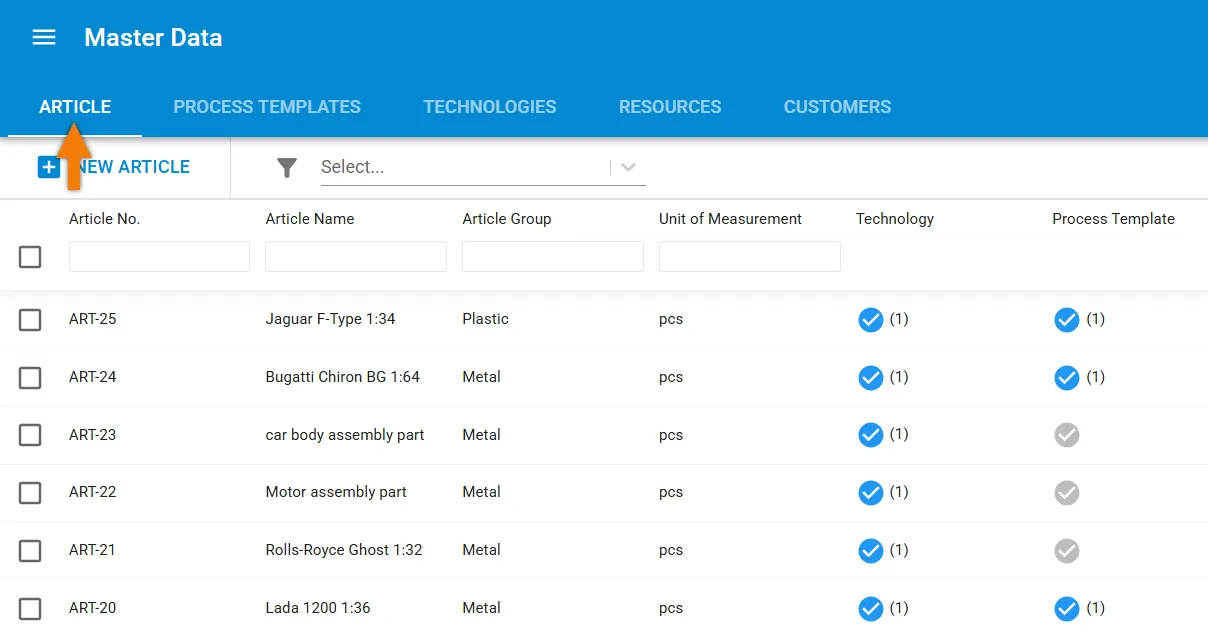
Articles
An Article is any product your company makes or manage. It’s the starting point for all your planning in planeus.
Each Article will have:
- At least one or more Technologies that describe the production steps.
- One or more Process Templates for processes that happen before or after production.
How to edit Articles
When you open the Article Master Data, you’ll see a list of all Articles your company has set up.
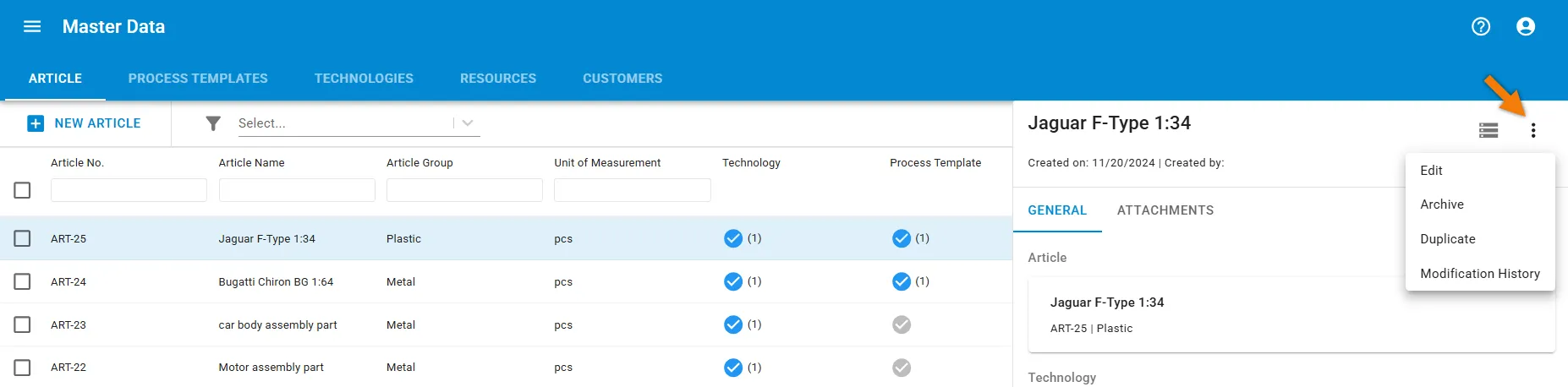
- Click on an Article to see its details.
- Click the Edit icon (the three-dot menu) to change its information.
How to Create a New Article
Here’s how to add a new Article in planeus:
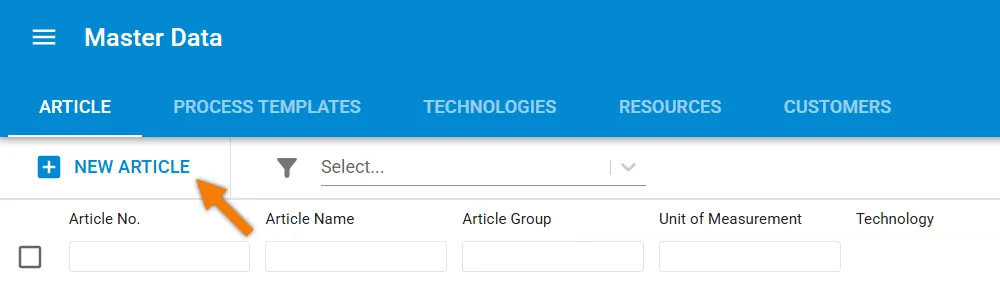
- Click the New Article button.
- Fill in the article details:
- Article Number
- Enter manually, or leave it blank for automatic numbering.
- Article Name
- This is required.
- Article Group (optional)
- Helps you categorize articles. You can manage Article Groups in Configuration.
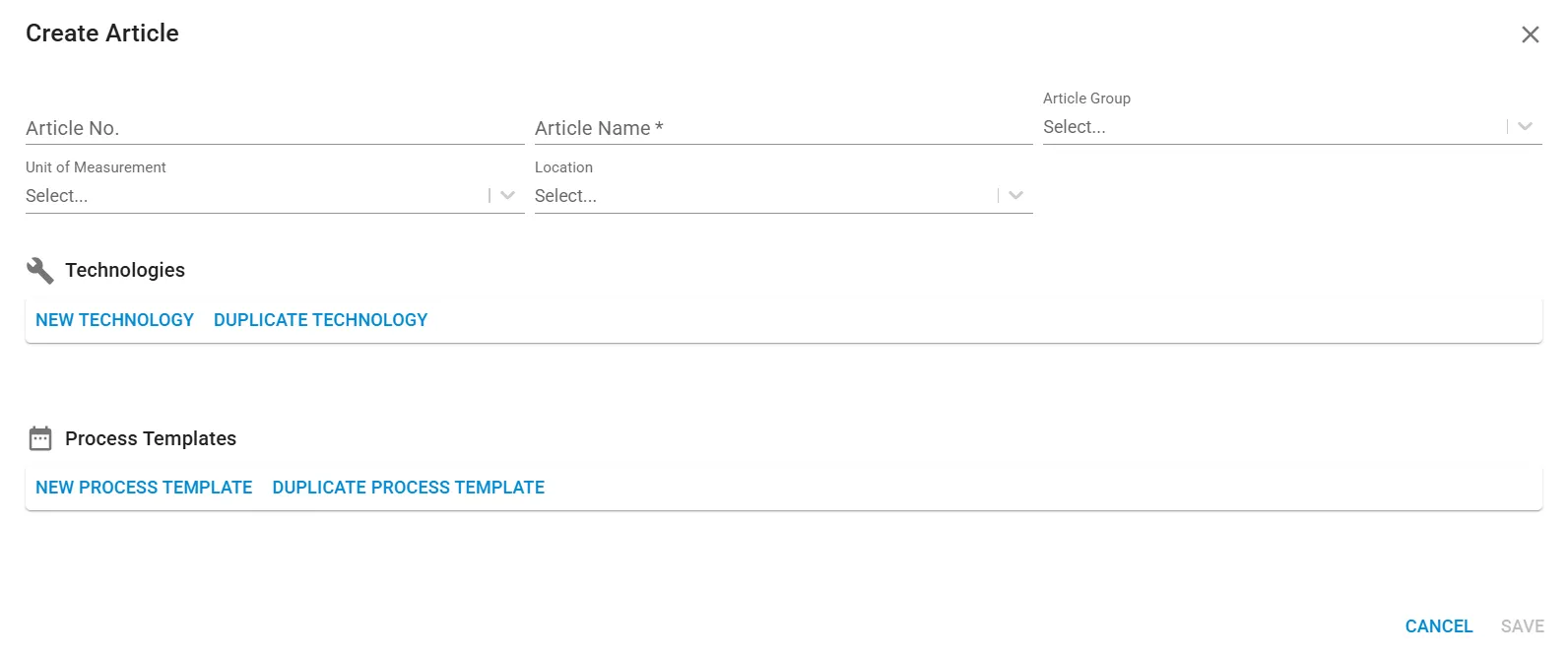
- Once saved, you can add or link:
- Technologies
- Process Templates
How to Duplicate an Article
If you need to create a similar article:
- Click the three-dot menu next to the article.
- Select Duplicate.
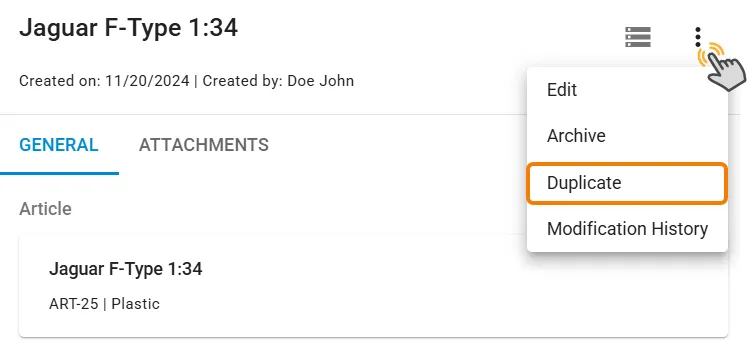
planeus will create a copy of the article, including:
- All linked Technologies
- All Process Templates
This saves time when setting up similar products.
Technology
A Technology tells planeus how to make an article. It lists all the Work Steps needed for production.
Why Use Multiple Technologies for One Article?
- You might have different methods to produce the same product.
- For example:
- Small orders might use a simpler process.
- Large orders might need a faster, more automated method.
planeus lets you define different Technologies for each scenario.
Only one Technology can be assigned per Order Item. planeus uses the one marked as “Standard,” unless you choose a different one.
How to Create Technologies
You create Technologies right inside the Article Master Data.
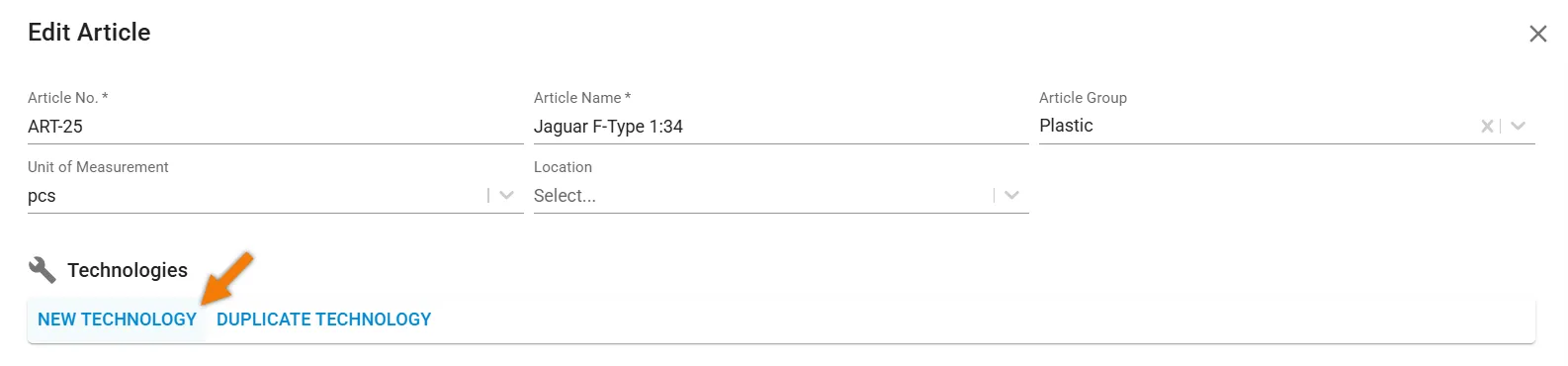
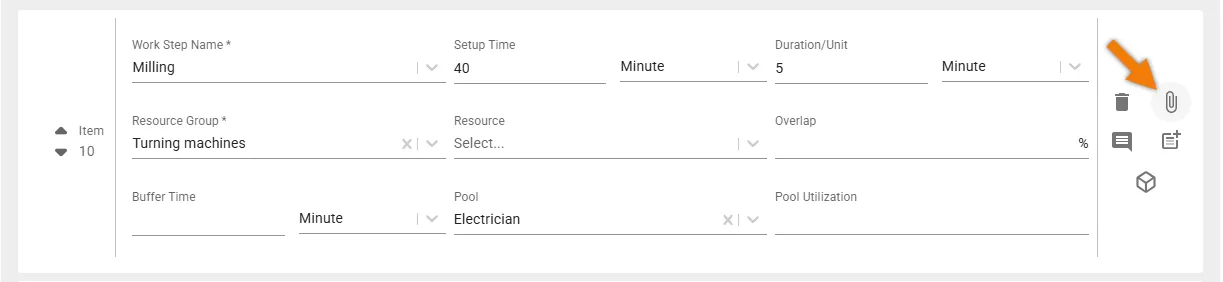
For each Technology, you can define:
Work Step Name
- The name of the task in production.
Setup Time
- Time needed to get equipment ready, regardless of quantity.
Duration
- Time required per unit produced.
Resource Group
- Group of machines or people who can perform this step.
Specific Resource (optional)
- A particular machine, tool, or worker.
Overlap
- Lets one step start before the previous one finishes.
Buffer Time
- Minimum time gap between this step and the next.
Add Comments and Attachments
For each Work Step, you can also:
- Write comments for extra details.
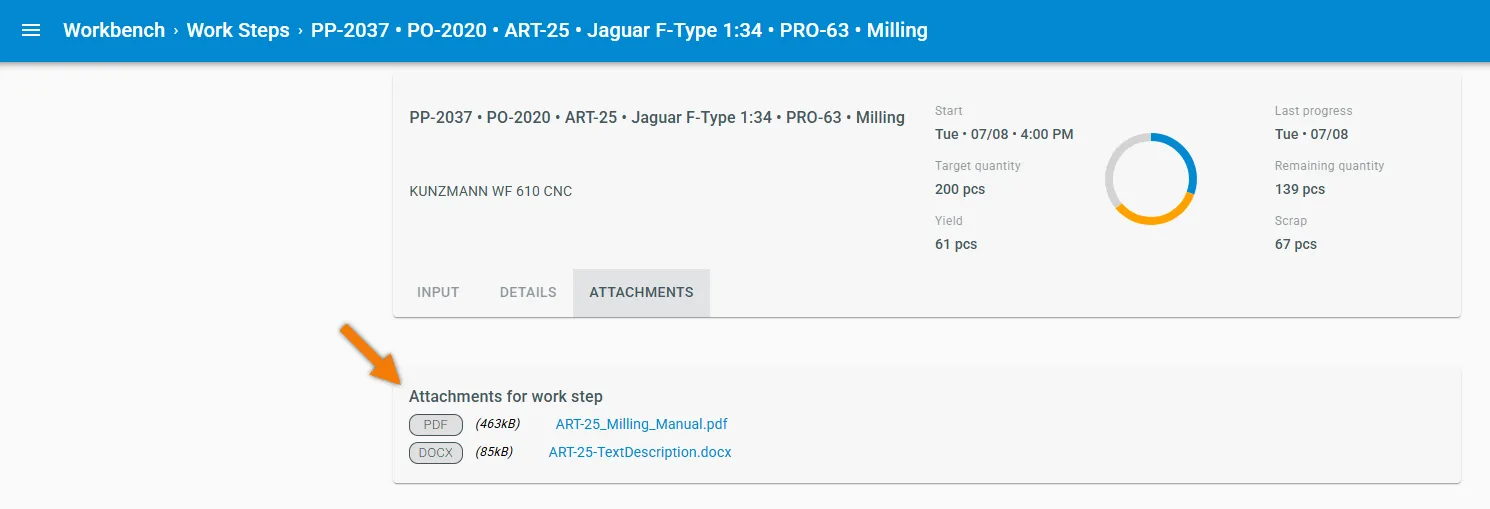
- Attach documents or images (like drawings or instructions).
These are visible in the Workbench, so your team can always access important info during production.
How planeus Calculates Production Times
planeus calculates the production time for each Work Step using this formula:
Production Time = (Order Quantity × Duration) + Setup TimeFor example:
- If your order is for 100 pieces, and each piece takes 2 minutes, plus 30 minutes of setup → Total time = (100 × 2) + 30 = 230 minutes
On the planning Gantt charts, you’ll also see a few other types of times:
Occupied Time The total time the operation takes — shown as the full length of the bar in the schedule.
Actual Time The real time reported back from the shop floor.
The shortest possible occupied time is 1 second. If the calculated planned time is less than 1 second, it will be automatically rounded up to 1 second.
Extra Features in Technologies
Technologies also support advanced features such as:
- Pools — group of resources that can share tasks
- Parallel Resources — extra resources that work alongside the main process
- Characteristics — special rules or attributes for planning
- Cycles — repeated patterns for production tasks
Process Templates
A Process Template defines steps that are happen before or after production — like planning, approvals, inspections, or shipping.
These steps appear in the Timeline View in planeus once an order exists for the article.
Why Use Multiple Process Templates for One Article?
You might have different pre- or post-production steps depending on:
- Customer requirements
- Product types
- Project specifics
Just like Technology, one Order Item can only be assigned to one Process Template. By default, planeus uses the one marked as “Standard,” unless you choose a different one.
How to Create Process Templates
Scroll down to the bottom and you can create Process Templates inside the Article Master Data.
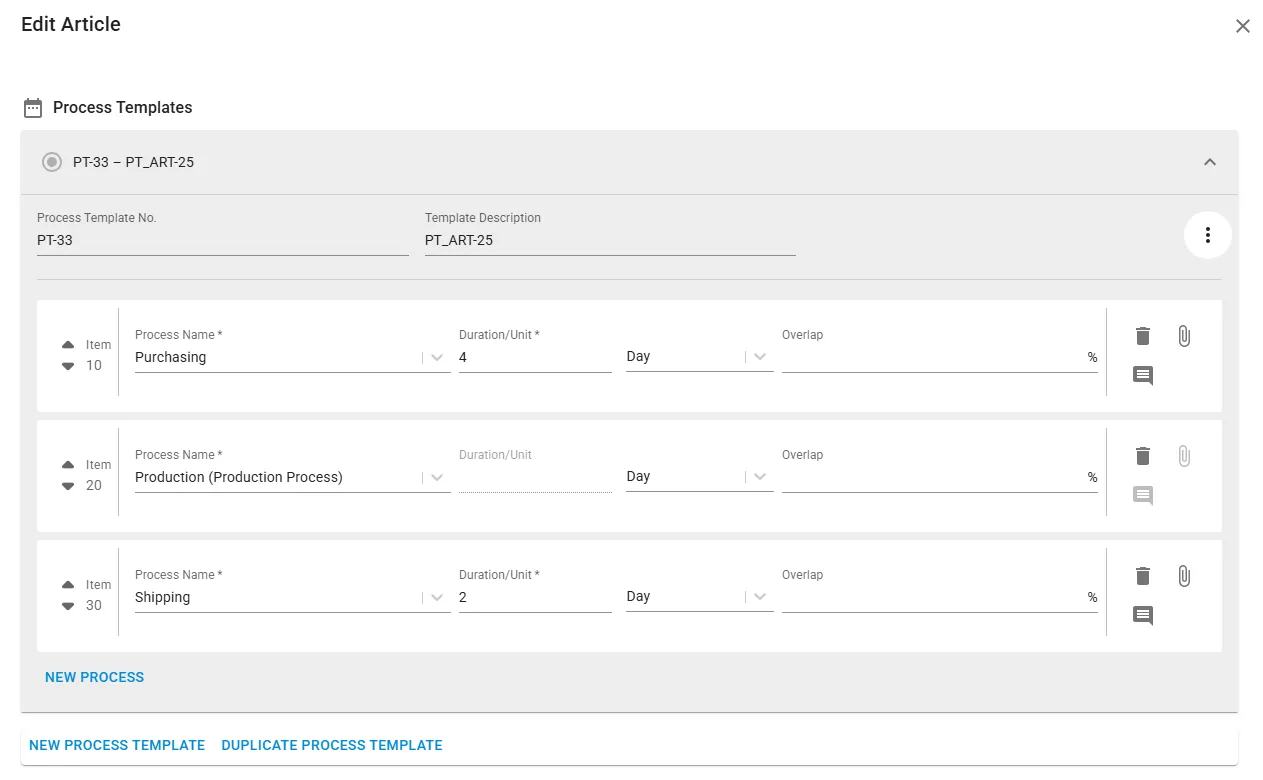
For each step in a Process Template, you can define:
- Process Name
- Duration
- Overlap
- Whether the step can run partly in parallel as the previous one.
Every Process Template needs at least one Work Step marked as a Production Process. This links the Process Template with the production steps in the Technology. More in Plan with Gantt chart.
Add Comments and Attachments
For each Process, you can:
- Add comments for clarity.
- Attach files, such as documents, images, or instructions.
These are visible in the Workbench Classic under Processes.
Attaching documents
You can attach documents directly to:
- Articles
- Work Steps
- Processes
Supported file types include: bmp, jpeg, jpg, png, tif, tiff, odp, pps, ppt, pptx, ppsx, ods, xlr, xls, xlsx, xlsm, csv, doc, docx, odt, pdf, rtf, txt
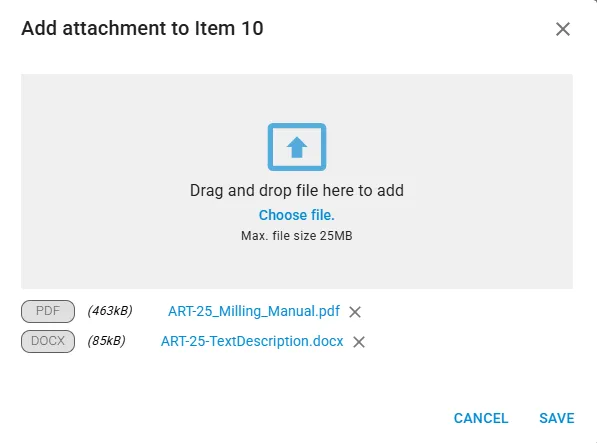
These files are also available in the Workbench so your team has the info they need on the shop floor.